

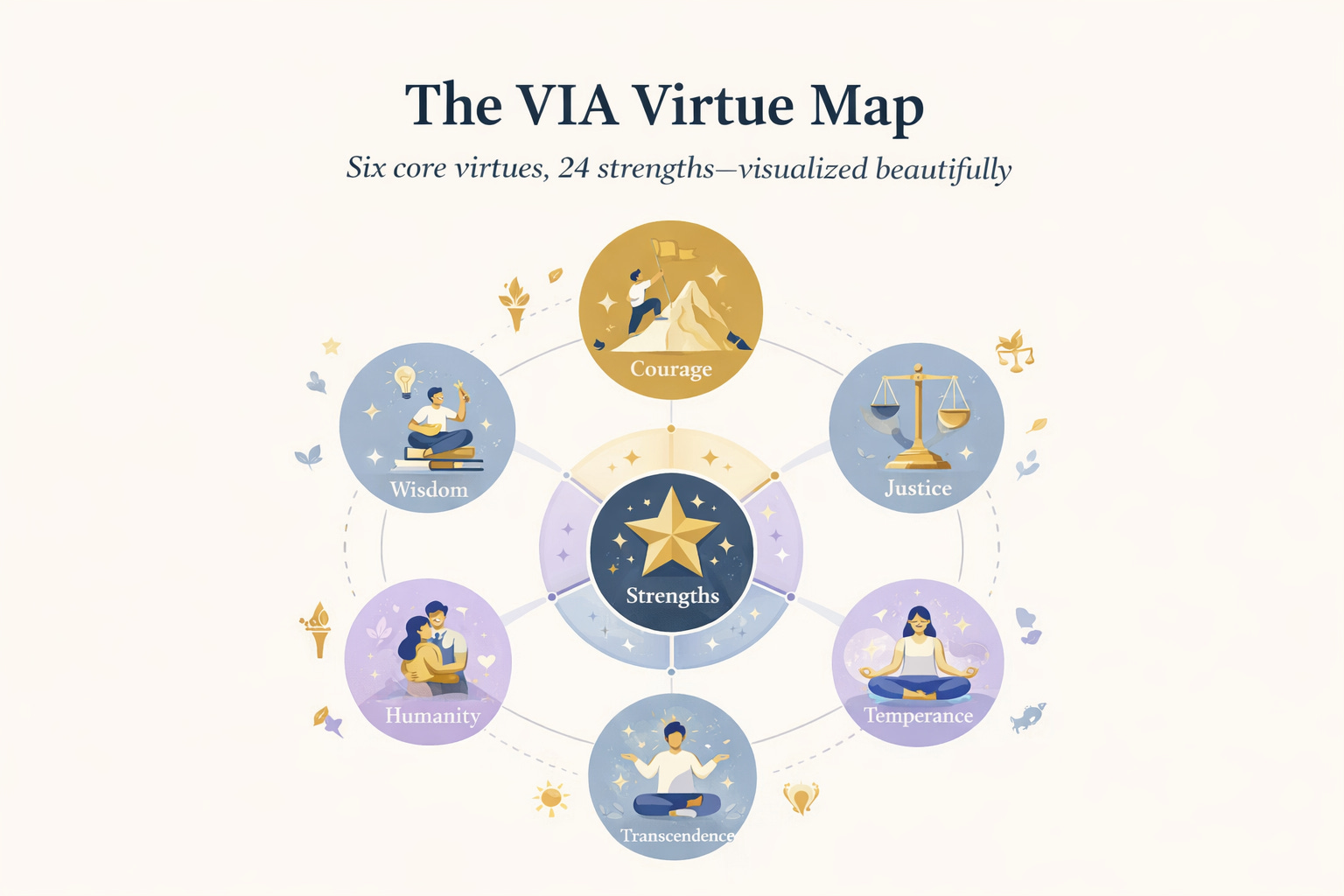
The pursuit of personal fulfillment and a sense of purpose is a universal human endeavor. In the field of Positive Psychology, the VIA Virtue Map serves as a vital framework for this journey, offering a beautifully visualized guide to the six core virtues and 24 character strengths that define our best selves. By shifting the focus from fixing deficits to nurturing inherent strengths, this framework provides a practical roadmap for individuals to promote well-being, increase life satisfaction, and cultivate a truly meaningful life.
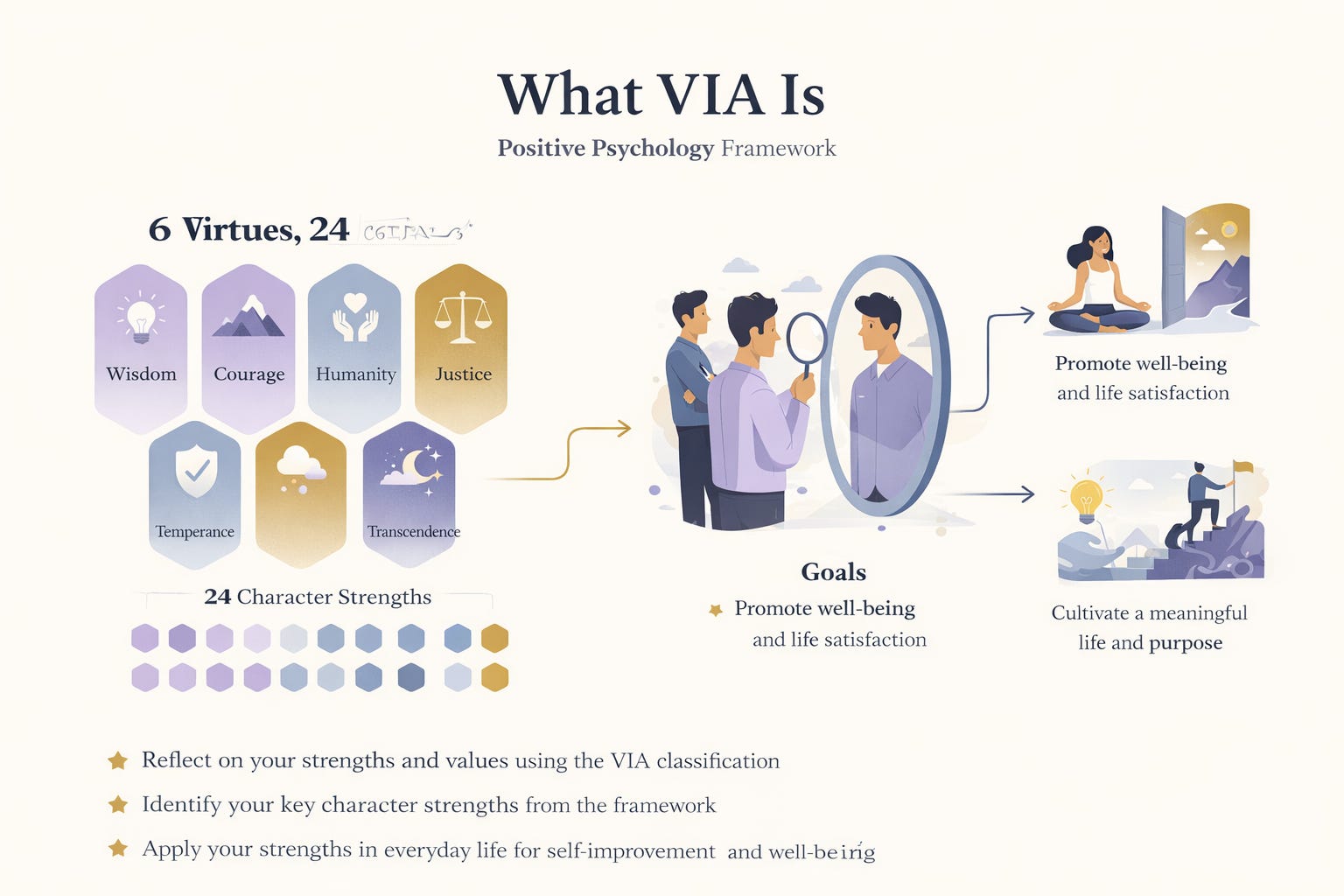
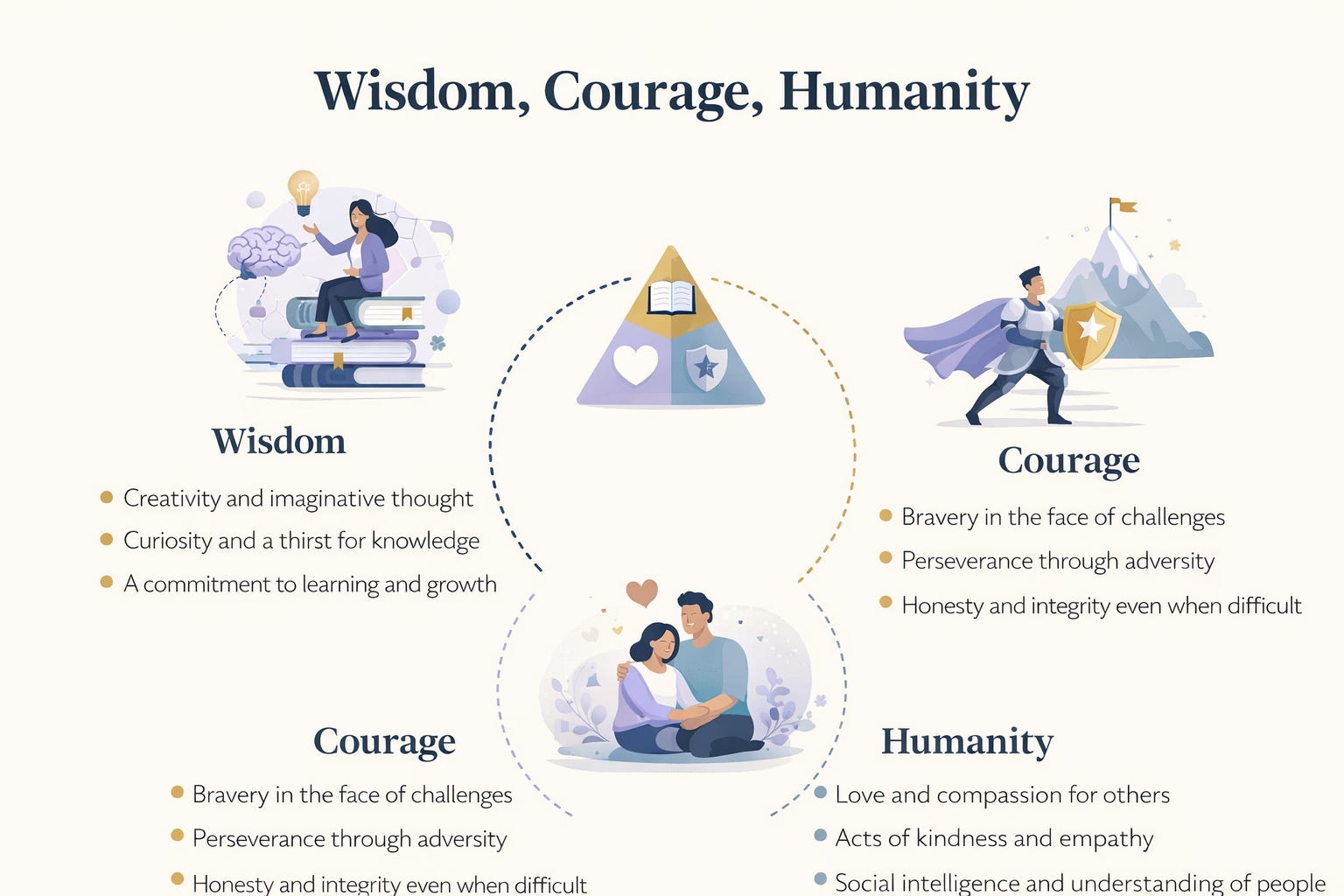
The foundation of the VIA framework rests upon six universal virtues, each acting as a category for specific character strengths. The first three virtues focus on our internal cognitive and interpersonal capabilities. Wisdom involves strengths like creativity, curiosity, and a commitment to lifelong learning. Courage is defined by the exercise of will in the face of adversity, encompassing bravery, perseverance, and unwavering honesty. Meanwhile, Humanity centers on interpersonal connection through love, compassion, kindness, and social intelligence. These virtues allow us to navigate our personal growth and our relationships with others with intentionality.
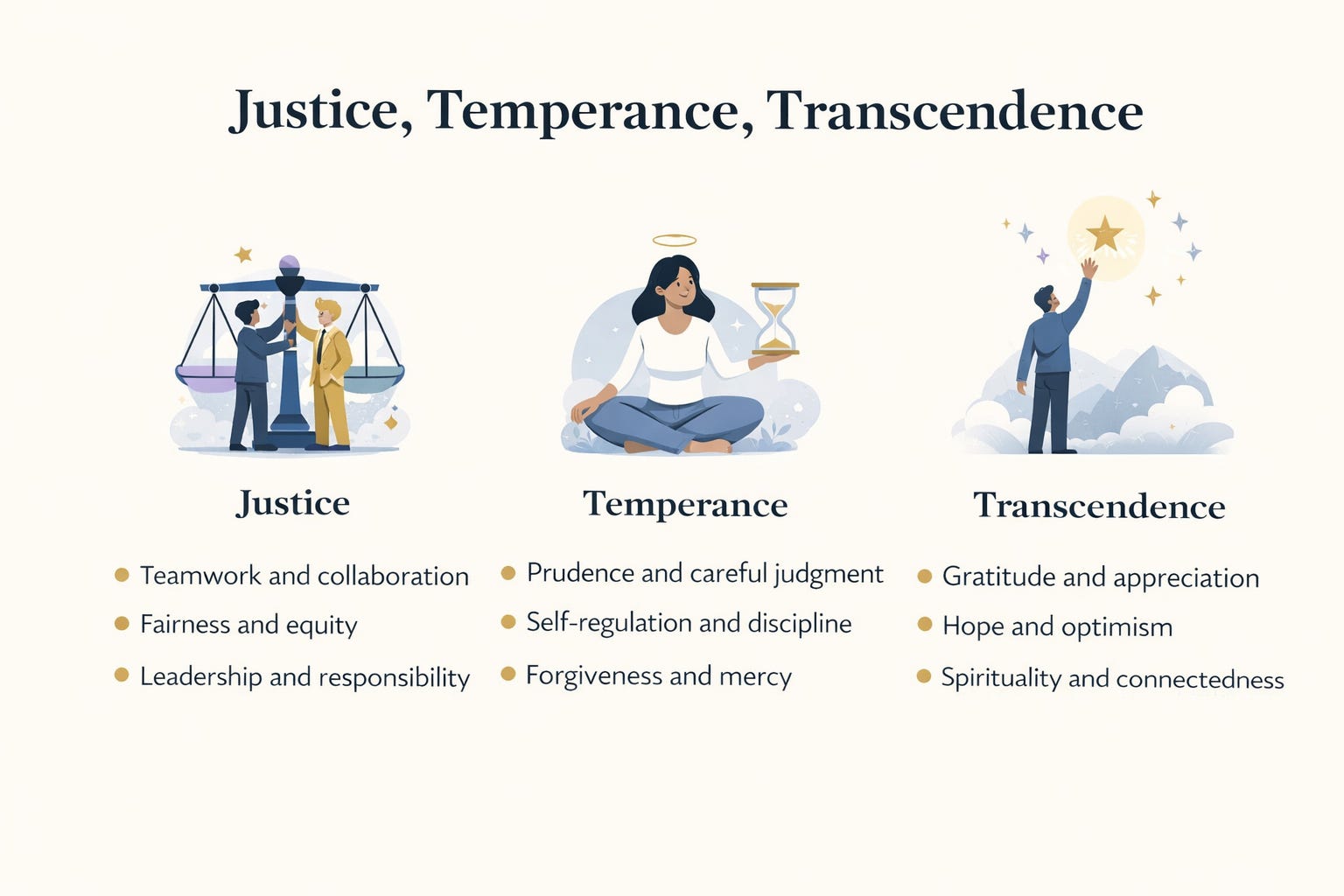
The remaining three virtues extend our focus toward our role in society and our connection to the larger world. Justice highlights civic strengths such as teamwork, fairness, and responsible leadership, which are essential for a healthy community. Temperance provides a necessary balance by encouraging prudence, self-regulation, and the practice of forgiveness to protect against excess. Finally, Transcendence helps us find meaning beyond ourselves through gratitude, hope, and a sense of spiritual connectedness to the universe. Together, these twenty-four strengths represent a comprehensive toolkit for human flourishing.
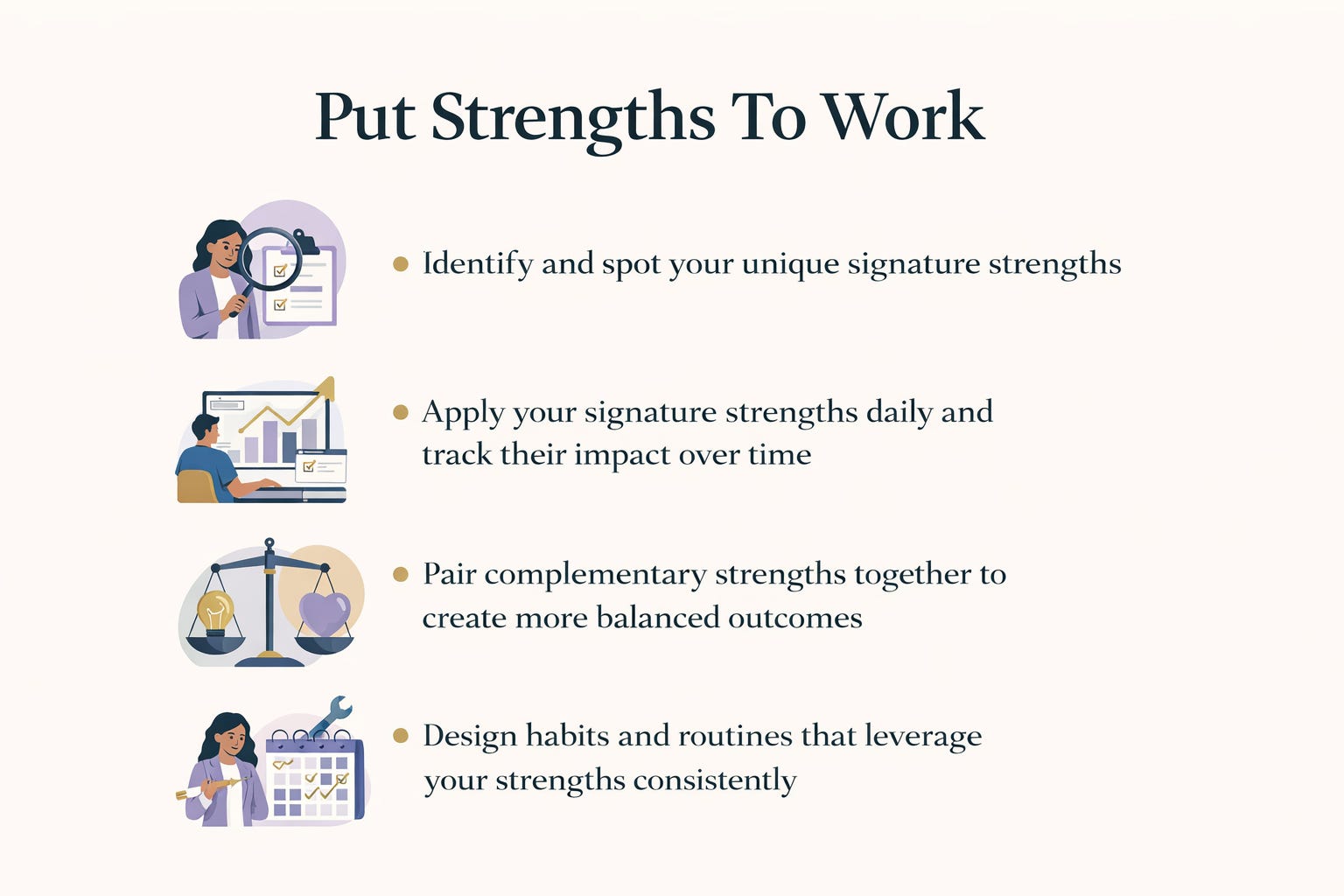
Understanding these strengths is only the beginning; the ultimate goal is to put these strengths to work in daily life. The process begins with reflecting on one’s values and using the VIA classification to identify unique signature strengths. Once these core traits are identified, the framework encourages individuals to apply them daily while tracking their impact over time to see real-world self-improvement. Furthermore, one can achieve more balanced outcomes by pairing complementary strengths together and designing consistent habits that make leveraging these virtues a natural part of their routine.
In conclusion, the VIA Virtue Map is more than just a list of traits; it is a dynamic system for self-discovery and intentional living. By identifying and intentionally applying our inherent strengths, we can bridge the gap between who we are and who we have the potential to become. Embracing these virtues allows us to not only improve our own well-being but also to contribute more meaningfully to the world around us.